
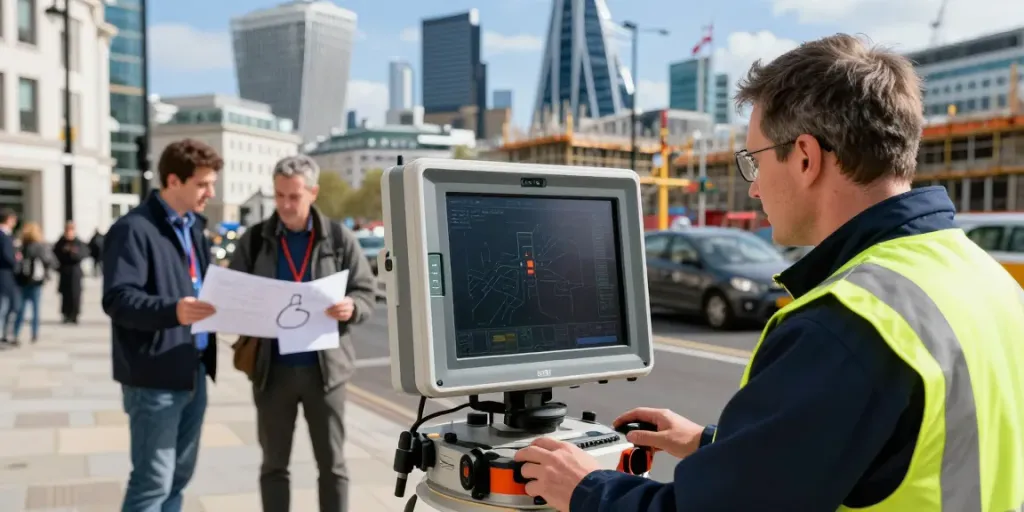
Understanding GPR Surveys London
As urban areas in London continue to expand and develop, the need for precise knowledge of the subsurface landscape has never been more critical. Ground Penetrating Radar (GPR) surveys have emerged as a vital tool in this regard, offering a non-invasive method for locating and mapping underground utilities and structures. When exploring options, GPR Surveys London delivers comprehensive insights and solutions that cater to both small-scale projects and large infrastructure undertakings.
What is Ground Penetrating Radar?
Ground Penetrating Radar (GPR) is a geophysical method that employs electromagnetic radiation to image the subsurface. This technology sends radar pulses into the ground and, upon encountering different materials, reflects signals back to the surface. The recorded data allows specialists to create detailed images of the subsurface landscape, helping to identify the presence of utilities, voids, and other buried features without invasive digging practices.
Key Applications of GPR Surveys
- Utility Mapping: GPR is extensively used for locating underground utilities such as gas, water, electricity, and telecommunications.
- Geotechnical Investigations: Assessing soil composition and identifying potential hazards in construction zones.
- Environmental Studies: Discovering contamination in soil or groundwater by detecting anomalies in subsurface materials.
- Archaeological Investigations: Mapping archaeological sites to locate artifacts and understand historical contexts.
The Technology Behind GPR
GPR systems typically comprise a transmitter and a receiver. The transmitter generates electromagnetic waves, while the receiver detects the reflected signals. GPR uses different frequencies depending on the required depth and resolution; higher frequencies provide better detail but penetrate less deep, while lower frequencies can reach deeper but offer lower resolution. This versatility makes GPR suitable for various applications, including construction, environmental monitoring, and archaeology.
Advantages of GPR Surveys in Urban Areas
Non-Invasive Benefits and Applications
One of the standout advantages of GPR surveys is their non-invasive nature. Unlike traditional excavation methods that disrupt the area and can lead to unforeseen complications, GPR allows for an assessment of subsurface conditions without any physical alteration to the site. This makes it ideal for urban environments, where minimising disruption is often a primary concern. Additionally, GPR can operate in a variety of weather conditions, thus providing flexibility in scheduling and execution.
Cost-Effectiveness Compared to Traditional Surveys
When considering the costs associated with construction and development projects, GPR surveys often prove to be more economical than traditional methods. By providing immediate data on the location of utilities, GPR can significantly reduce the time and resources spent on excavation and remediation. This efficiency translates to lower overall project costs and mitigates the risk of unexpected delays caused by damaged underground infrastructure.
Impact on Construction and Safety Planning
The integration of GPR surveys into the planning phases of construction projects enhances safety and reduces risk. By accurately identifying the positions of existing utilities, contractors can avoid damaging them during excavation. This proactive approach not only safeguards personnel but also helps in adhering to regulatory compliance standards, which can be particularly stringent in urban settings like London.
Common Challenges in GPR Surveys London
Interpreting Complex Subsurface Data
While GPR technology is powerful, the interpretation of its data can be quite complex. The quality of GPR data can vary based on soil composition, moisture content, and the presence of other underground structures. Skilled operators must be adept in analysing the data to distinguish between true anomalies and false readings caused by natural materials. This requires both training and experience, highlighting the importance of employing qualified personnel for GPR surveys.
Limitations of GPR Technology
Despite its many advantages, GPR does have limitations. For instance, its effectiveness diminishes in densely packed urban environments where multiple layers of infrastructure exist. Additionally, GPR struggles with highly conductive materials such as clay, which can absorb radar signals and obscure subsurface features. Operators must remain aware of these limitations and adapt their techniques accordingly to ensure the accuracy and reliability of the surveys.
Addressing Environmental Factors
Environmental conditions can significantly influence the outcome of GPR surveys. Variables like soil moisture, temperature, and even the presence of vegetation can affect the penetration depth and clarity of the radar signals. As a result, it is crucial to conduct environmental assessments prior to the survey, allowing for adjustments in methodology to achieve the best results in London’s diverse urban terrain.
Best Practices for Conducting GPR Surveys
Preparation and Site Assessment Techniques
Effective GPR surveys begin with meticulous planning and preparation. Conducting a thorough site assessment helps in identifying potential obstacles and formulating an appropriate survey strategy. Essential steps include reviewing existing utility maps, consulting stakeholders, and understanding site-specific characteristics that may influence survey outcomes. Engaging with local authorities and ensuring compliance with regulations is also vital to avoid potential legal issues.
Data Collection Methodologies
For optimal results, GPR surveys should employ systematic data collection methodologies. A grid pattern is typically standard, allowing for comprehensive coverage of the area. Additionally, collecting data at various depths can provide a holistic view of the subsurface conditions. Operators should also ensure proper calibration of equipment before commencing the survey to maintain accuracy and reliability in the data collected.
Interpreting and Reporting Findings Effectively
Post-survey analysis is as crucial as the data collection process. Experienced professionals should interpret the GPR data to produce easily understandable reports that highlight critical findings. Visual aids like cross-sectional images can greatly enhance clarity for non-technical stakeholders. Moreover, timely reporting facilitates prompt decision-making, ensuring that project timelines remain intact.
The Future of GPR Surveys in London (2026 and Beyond)
Emerging Technologies and Innovations
The landscape of GPR technology is continually evolving, with advancements in software and hardware leading to improved accuracy and efficiency. Innovations such as drone-mounted GPR systems and enhanced software algorithms allow for quicker data collection and processing. These developments promise to refine the capabilities of GPR surveys, making them even more integral to urban planning and development in London.
Industry Trends Affecting GPR Surveys
As cities grow and the demand for efficient construction practices rises, the reliance on GPR surveys is expected to increase. The intersection of GPR technology with Building Information Modelling (BIM) is illustrative of a trend where integrated data facilitates comprehensive project oversight. Such synergies will enhance project efficiency, safety, and sustainability, addressing the complexities of urban environments.
Expert Insights and Predictions
Experts predict that the future of GPR surveys will see an expansion in their application within the realm of smart city initiatives. With the integration of GPR data into digital frameworks, urban planners will possess enhanced tools for managing infrastructure in real-time. This forward-thinking approach not only benefits construction but also contributes to the long-term sustainability and resilience of urban environments like London.